KDG

KDG Workspace

Intelligent Monitoring Service

Reading the meaning beyond the data — not just anomaly detection, but root cause estimation and next-action guidance powered by knowledge
Error Log Analysis
Details

Error Log Analysis

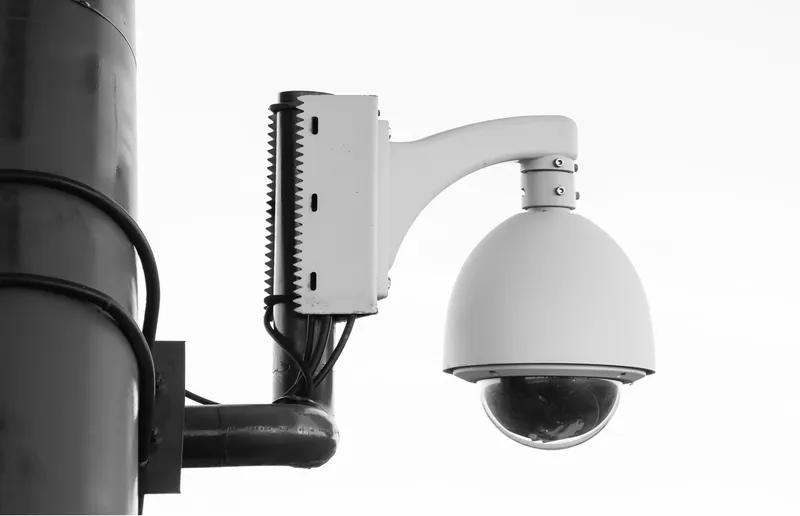
Analyze CCTV surveillance system error logs and generate diagnostic reports

CCTVError LogHDDNetworkSurveillance
Error Log Analysis

Error Log Analysis

Analyze CCTV surveillance system error logs and generate diagnostic reports

Expected Challenges

Specialized work to identify equipment anomalies from surveillance camera system error logs and determine remediation methods

Integration with Existing Workflows

Submit error log file → Parse and classify → Estimate cause using KDG knowledge → Auto-generate report

Leveraging KDG Knowledge

CCTV error code dictionary, equipment failure patterns, recovery procedures, past response records

Error Code DictionaryFailure PatternsRecovery ProceduresPast Response Records

Expected Outcomes

Anomaly cause identification from error logs with prioritized remediation methods

CCTVError LogHDDNetworkSurveillance
IoT Sensor Data Analysis
Details

IoT Sensor Data Analysis

Analyze motor abnormal vibration sensor data and generate diagnostic reports

IoTSensorVibrationMotorAnomaly Detection
IoT Sensor Data Analysis

IoT Sensor Data Analysis

Analyze motor abnormal vibration sensor data and generate diagnostic reports

Expected Challenges

Need to detect anomaly signs from 24-hour motor vibration sensor data and determine appropriate maintenance actions

Integration with Existing Workflows

24h vibration data auto-collection → Threshold check → KDG diagnosis → Auto-generate report → Slack notification

Leveraging KDG Knowledge

Vibration diagnostic standards (ISO 10816), failure mode knowledge, trend analysis, past diagnostic records

Vibration Diagnostic StandardsFailure ModesTrend AnalysisMaintenance Decision Criteria

Expected Outcomes

Early anomaly detection based on vibration data with appropriate maintenance action recommendations

IoTSensorVibrationMotorAnomaly Detection
Reverse FTA Analysis
Details

Reverse FTA Analysis

Traverse FTA trees built from past critical failure cases in reverse, presenting hypotheses of critical failure reachability from current sensor data

Reverse FTAFailure CatalogEvidence LevelHypothesisEarly Detection
Reverse FTA Analysis

Reverse FTA Analysis

Traverse FTA trees built from past critical failure cases in reverse, presenting hypotheses of critical failure reachability from current sensor data

Expected Challenges

When CBM sensors detect anomalous values, determining whether the anomaly is 'merely a temporary fluctuation' or 'a precursor to a critical failure' is one of the most important and difficult decisions in equipment maintenance. This judgment requires advanced reasoning to trace FTA (Fault Tree Analysis) trees built from past critical failure cases in reverse, evaluating the reachability of critical failures from current sensor states.

Integration with Existing Workflows

When the CBM system detects a sensor anomaly, reverse FTA analysis is automatically triggered. It integrates with the CBM dashboard and requires no additional setup. Starting from the anomalous sensor data, it traverses FTA trees registered in the critical failure catalog in reverse.

Leveraging KDG Knowledge

KDG has accumulated a catalog of FTA trees built from past critical failure cases. Each FTA tree structures the causal chain from top events (critical failures) to basic events (initial anomalies), managed in a data structure optimized for reverse traversal.

Critical Failure FTA CatalogEvidence Level DefinitionsBasic Event-Sensor MappingReachability Assessment CriteriaPreventive Maintenance Actions

Expected Outcomes

Systematically evaluate the reachability of critical failures from CBM sensor anomalies, enabling early detection at the precursor stage.

Reverse FTAFailure CatalogEvidence LevelHypothesisEarly Detection

Condition-Based Maintenance (CBM) Solutions

Condition-Based Maintenance (CBM)
Details

Condition-Based Maintenance (CBM)

Equipment condition trend analysis, FFT heatmaps, KDG analysis decisions, and maintenance planning dashboard

Trend AnalysisFFTKDG AnalysisMaintenance PlanEquipment Master
Condition-Based Maintenance (CBM)

Condition-Based Maintenance (CBM)

Equipment condition trend analysis, FFT heatmaps, KDG analysis decisions, and maintenance planning dashboard

Expected Challenges

IoT sensors (vibration, temperature, current, pressure, etc.) installed on manufacturing and plant equipment continuously generate data 24/7, but distinguishing 'anomalies requiring immediate action' from 'normal-range fluctuations' requires the judgment of veteran engineers who understand each equipment's characteristics and operating conditions.

Integration with Existing Workflows

This solution leverages the existing sensor monitoring infrastructure as-is. Sensor data is automatically collected 24/7 and stored in the system. After data collection, automated checks are performed based on thresholds configured for each piece of equipment.

Leveraging KDG Knowledge

KDG systematizes the diagnostic knowledge cultivated by veteran equipment maintenance engineers, including knowledge for estimating failure modes from vibration frequency characteristics, predicting degradation rates from temperature trends, and identifying root causes of anomalies from multi-sensor correlations.

Vibration Diagnostic StandardsFailure Mode DBMaintenance Decision CriteriaTrend Analysis KnowledgeOperating Condition Correction

Expected Outcomes

Automate the process from sensor anomaly detection to diagnostic report generation, supporting continuous CBM monitoring.

Trend AnalysisFFTKDG AnalysisMaintenance PlanEquipment Master
Mobile CBM
Details

Mobile CBM

Identify equipment via QR code and perform measurement input, meter photo reading, periodic inspections, and anomaly reporting from the field

QR ScanMeasurementPhoto ReadingInspectionAnomaly Report
Mobile CBM

Mobile CBM

Identify equipment via QR code and perform measurement input, meter photo reading, periodic inspections, and anomaly reporting from the field

Expected Challenges

CBM (Condition-Based Maintenance) systems are essential tools for equipment condition monitoring and diagnostics, but conventional systems were only available in office PC environments, preventing field engineers from checking equipment status in real time during rounds.

Integration with Existing Workflows

Field engineers simply open the Mobile CBM app on their mobile device (smartphone or tablet) and scan the QR code attached to the equipment to access that equipment's sensor data, diagnostic results, and maintenance history.

Leveraging KDG Knowledge

The knowledge referenced by Mobile CBM is the same KDG knowledge base as the CBM dashboard. Vibration diagnostic standards, failure mode DB, maintenance decision criteria, and trend analysis knowledge are all accessible from mobile devices.

Vibration Diagnostic StandardsFailure Mode DBMaintenance Decision CriteriaTrend Analysis KnowledgeInspection Standards

Expected Outcomes

Complete equipment status checks, diagnostic reference, and data entry during field rounds with a single mobile device, improving patrol efficiency and initial response speed.

QR ScanMeasurementPhoto ReadingInspectionAnomaly Report
CBM Maintenance Plan Review
Details

CBM Maintenance Plan Review

Review existing maintenance plans with KDG knowledge, diagnosing timing, parts selection, and cost optimization with improvement proposals

Plan ReviewTacit KnowledgeCost OptimizationRisk AssessmentKDG Insight
CBM Maintenance Plan Review

CBM Maintenance Plan Review

Review existing maintenance plans with KDG knowledge, diagnosing timing, parts selection, and cost optimization with improvement proposals

Expected Challenges

Manufacturing and plant equipment maintenance plans are required to transition from conventional TBM (Time-Based Maintenance) to CBM (Condition-Based Maintenance), but this transition decision requires advanced knowledge that comprehensively considers equipment failure mechanisms, operating conditions, maintenance costs, and risks.

Integration with Existing Workflows

Simply submit existing maintenance plans (Excel or maintenance management system data) to the system to start diagnostics. No changes to existing maintenance workflows are required.

Leveraging KDG Knowledge

KDG systematizes the knowledge needed to optimize equipment maintenance plans, including failure modes and degradation mechanisms for each equipment type, TBM-to-CBM transition criteria, maintenance interval optimization logic, parts selection criteria, and cost optimization approaches.

Equipment Failure Mode KnowledgeMaintenance Interval OptimizationCBM Transition CriteriaParts Selection KnowledgeCost Optimization

Expected Outcomes

Objectively and quantitatively evaluate maintenance plan validity, preventing both over-maintenance and under-maintenance.

Plan ReviewTacit KnowledgeCost OptimizationRisk AssessmentKDG Insight

Anomaly Monitoring Solutions

Supply Chain Anomaly Monitoring (SCM)
Details

Supply Chain Anomaly Monitoring (SCM)

Detect and monitor anomalies across the entire supply chain, supporting early risk discovery and response

Supply ChainAnomaly DetectionRisk MonitoringLogisticsInventory
Supply Chain Anomaly Monitoring (SCM)

Supply Chain Anomaly Monitoring (SCM)

Detect and monitor anomalies across the entire supply chain, supporting early risk discovery and response

Expected Challenges

In supply chains for food and other goods, various disruption risks occur regularly, including supplier shutdowns, port closures, quality issues, sudden demand changes, raw material price surges, and geopolitical risks.

Integration with Existing Workflows

This solution does not change existing procurement and logistics workflows. It can be used simply by opening the SCM monitoring screen when disruption events are detected through supplier notifications, news alerts, or internal reports.

Leveraging KDG Knowledge

KDG systematizes veteran knowledge for disruption response across six categories. When an event occurs, KDG receives a 'Situation Context' combining impact propagation results with current facts, and searches for the most relevant knowledge to respond.

Response ChecklistsRegulatory RequirementsQuality StandardsPast CasesAlternative Candidate Evaluation CriteriaEscalation Criteria

Expected Outcomes

Help shorten the time from event occurrence to having the information needed for decisions.

Supply ChainAnomaly DetectionRisk MonitoringLogisticsInventory
IT Infrastructure Anomaly Monitoring (IFT)
Details

IT Infrastructure Anomaly Monitoring (IFT)

Detect anomalies in servers, networks, and cloud infrastructure, supporting failure prediction analysis and response

ServerNetworkCloudFailure DetectionPredictive Analysis
IT Infrastructure Anomaly Monitoring (IFT)

IT Infrastructure Anomaly Monitoring (IFT)

Detect anomalies in servers, networks, and cloud infrastructure, supporting failure prediction analysis and response

Expected Challenges

When IT infrastructure failures occur, initial triage (identifying failure points and determining escalation targets) is the operations team's most critical and time-sensitive task. However, in environments where servers, networks, storage, and batch processes are complexly interdependent, identifying the true failure point from logs and alerts requires expert knowledge.

Integration with Existing Workflows

Upon receiving logs and alerts from monitoring systems, the system automatically begins impact propagation analysis on the dependency graph. It integrates with existing monitoring infrastructure (Zabbix, Datadog, CloudWatch, etc.) through alert integration, requiring no changes to the monitoring setup.

Leveraging KDG Knowledge

KDG systematizes the incident response knowledge cultivated by veteran IT infrastructure engineers across six categories, including runbooks, escalation criteria, past incident cases, message code meanings, configuration standards, and batch dependencies.

RunbookEscalation CriteriaPast IncidentsMessage CodesConfiguration StandardsBatch Dependencies

Expected Outcomes

Shorten the time from failure occurrence to initial triage completion, contributing to MTTR improvement.

ServerNetworkCloudFailure DetectionPredictive Analysis